Grape Cultivation in Maharashtra: Key Pests & Diseases in Grapes and Biological Control with Kan Biosys Solutions
Grape Cultivation in Maharashtra: Key Pests & Diseases in Grapes and Biological Control with Kan Biosys Solutions
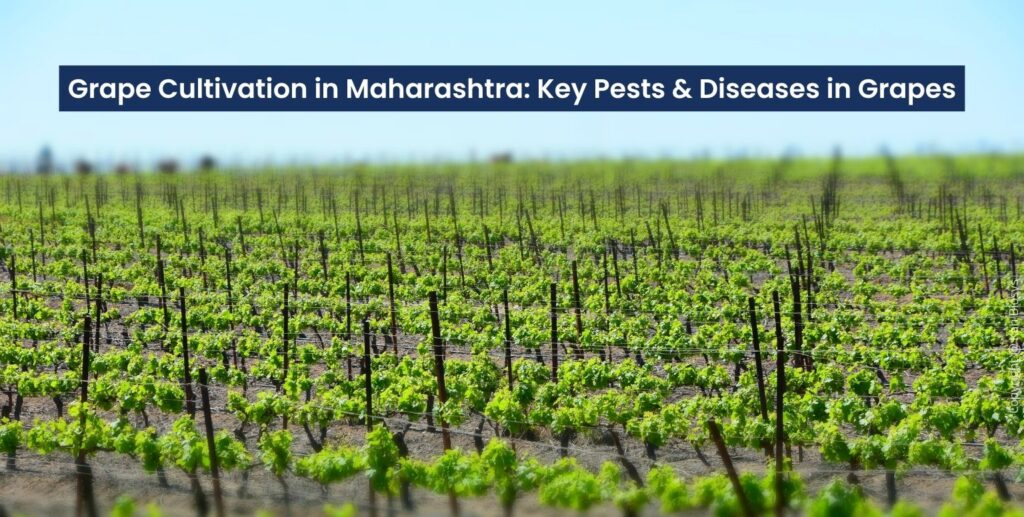
Maharashtra stands as the heartland of India’s grape cultivation contributing nearly 80% of the nation’s grape exports. Districts like Nashik, Sangli, Satara, Solapur, Dharashiv (Osmanabad) and Pune are renowned for their extensive vineyards and advanced management practices.
With a favourable subtropical climate, selected varieties, fertile soils and well-developed infrastructure, Maharashtra’s grape industry has evolved from small vineyards to a global success story.
Yet, behind this success lies a major challenge: pests and diseases that threaten vine health, fruit quality and export potential. High humidity during the monsoon and fluctuating temperatures during flowering and fruiting encourage pest and fungal infestations. According to NRC Grapes, timely monitoring and weather-based agro advisories are crucial to reduce these risks.
To maintain export quality and ensure residue-free, environmental friendly sustainable production, farmers are increasingly adopting biological crop protection. Kan Biosys – India’s leading biotechnology or microbial company offers wide range of bio-fungicides, bio-insecticides, bio-nematicides and bio-stimulants that help grape growers manage pests naturally and safely
Let’s explore how these solutions are transforming grape cultivation across Maharashtra.
Overview of Grape Cultivation in Maharashtra
Geographical & Climatic Conditions
Grapes thrive best in semi-arid tropical climates with mild winters and hot, dry summers—conditions found across:
- Nashik and Sangli – key export hubs for table grapes
- Pune, Solapur, Dharashiv (Osmanabad) – strong domestic market and raisin production zones
Ideal conditions:
- Temperature: 15 – 40 °C
- Rainfall: 500 – 700 mm annually (dry post-monsoon is ideal for berry ripening)
- Soil: Well-drained black cotton soils, sandy loams and red lateritic soils with pH 6.5 – 7.5
Major Grape Varieties & Cropping Pattern
Commonly grown varieties include:
- Thompson Seedless – most popular for export and raisin making
- Sharad Seedless – high yield, good for table consumption
- Tas-A-Ganesh, Flame Seedless, Sonaka, and Bangalore Blue (regional demand)
Cropping Calendar (Maharashtra):
- Foundation pruning: 15 April – 15 May
- Fruit pruning: 15 September – 15 October (in advance in some area of Nashik district)
- Harvest: January – March (export grapes)
Key Agronomic Practices
- Planting density: 1.8 × 3.0 m or 2 × 3 m depending on trellis type
- Trellising: bower system for better sunlight and air circulation
- Irrigation: Drip systems preferred to manage moisture precisely
- Canopy & nutrient management: Regular pruning, thinning, and balanced NPK, Ca, Mg and S as well as micronutrients schedule are critical
According to NRC Grapes advisories, good agronomic practices – such as monitoring soil water-holding capacity (WHC), applying sulphur in calcareous soils to lower pH and managing shoot vigour help vineyards maintain health and reduce disease risk.
Good agronomy is the first line of defence against pest and disease outbreaks.
Major Pests of Grapevines in Maharashtra
Common Pests and Their Impact
- Mealybugs (Maconellicoccus hirsutus)
Symptoms: White waxy colonies on shoots, leaves and bunches; sticky honey-dew leading to sooty mould (Capnodium moniliforme).
Damage: Reduces yield and marketability; vectors viral diseases. According to NRC Grapes, mealybugs are among the major pests in vine grapes and require early intervention. - Thrips (Scirtothrips dorsalis)
Symptoms: Silvery streaks on young leaves and berries; leaf curling.
Damage: Affects berry appearance and photosynthetic activity. - Mites (Tetranychus urticae)
Symptoms: Yellowing and bronzing leaves; fine webbing on undersides.
Damage: Reduces vigour and causes leaf drop during dry periods. NRC Grapes notes mite risk increases in early season post-pruning. - Leafhoppers
Symptoms: Small white patches on leaves; hopper burn under high populations.
Damage: Weakens vines and affects sugar accumulation in berries. - Stem borers (Stromatium barbatum, Celosterna scabrator, Dervishiya cadambae) / Cane borers
Damage: Larvae bore into canes, leading to wilting and die-back. NRC Grapes lists stem borer emergence from June in Maharashtra vineyards.
Why They Flourish in Maharashtra
Warm, dry climates followed by humid post-monsoon periods provide ideal breeding conditions. Residual plant debris and dense canopies harbour pest populations. Continuous cropping and heavy chemical usage have also led to resistance development.
Integrated Pest Management (IPM) Approach
- Regular monitoring: Weekly scouting for early detection.
- Cultural controls: Prune infested shoots, maintain clean vineyards, manage weeds.
- Mechanical measures: Sticky traps and pheromone traps for mealybugs and thrips.
- Biological control: Use Kan Biosys biologicals for sustainable management (detailed in Section 4).
Major Diseases of Grapevines in Maharashtra
Common Diseases
- Downy Mildew (Plasmopara viticola)
Symptoms: Yellowish “oil-spots” on upper leaf surface; white downy growth underneath of leaf.
Conditions: Favoured by high humidity (>85%) and moderate temperature (18–25 °C). According to NRC Grapes technical bulletin, this is among the major fungal diseases in Indian grape cultivation. - Powdery Mildew (Uncinula necator)
Symptoms: White powdery coating on leaves, shoots, berries.
Damage: Causes poor berry-setting, cracking and reduced sweetness. Biological control studies in Maharashtra show up to 80% disease reduction using antagonists.
Indian Agricultural Research Journals - Anthracnose (Elsinoë ampelina) / Bird’s-eye rot
Symptoms: Circular sunken spots on berries resembling bird’s eyes.
Conditions: Warm, humid post-monsoon weather. According to the NRC Grapes book, anthracnose occurs during vegetative growth under monsoon conditions. - Botrytis Grey Mould (Botrytis cinerea)
Symptoms: Soft brown rot on berries, grey fuzzy growth under moist conditions.
Damage: Affects export-quality grapes and raisin production. - Phomopsis Cane and Leaf Spot (Phomopsis viticola)
Symptoms: Dark brown spots on canes and leaves; poor bud sprouting. - Root-rot / Nematode issues
Symptoms: Stunted growth, yellowing, root galling.
Disease-Favouring Conditions
The post-monsoon period (October–December) with high humidity and moderate temperatures is critical for disease development. Poor ventilation, excess irrigation and dense foliage further enhance infection risks. NRC Grapes weekly advisories emphasize canopy ventilation and regulated irrigation to limit disease spread.
Disease Management Principles
- Sanitation: Remove infected leaves and canes after pruning.
- Canopy ventilation: Ensure open structure for airflow.
- Water management: Avoid overhead irrigation.
- Pruning: Use clean, disinfected tools.
- Biologicals: Adopt eco-friendly Kan Biosys solutions to replace or complement fungicides safer for workers, consumers and export compliance.
Biological Control Solutions from Kan Biosys
Why Biologicals Matter in Grapes
Export-oriented grape growers must meet strict residue limits. Biological products are:
- Eco-friendly: Safe for beneficial insects and soil microbes.
- Residue-free: Comply with international Maximum Residue Limits (MRLs).
- Sustainable: Prevent resistance build-up.
- Organic-compatible: Align with modern farming trends. According to NRC Grapes publications, reducing pesticide residue and moving towards biological/IPM strategies is key for quality grape production in India.
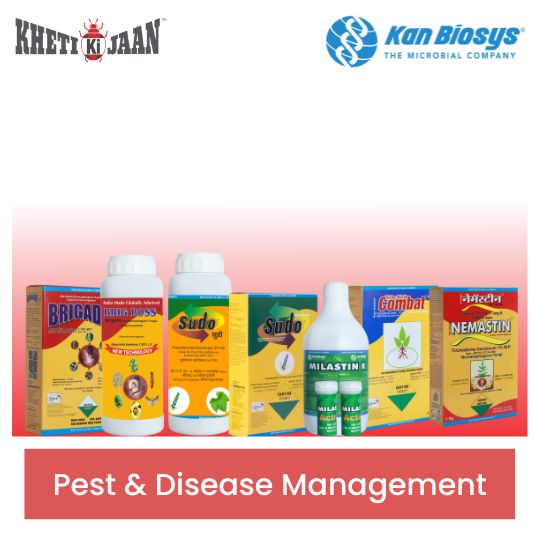
Overview of Relevant Kan Biosys Products
| Product | Category | Target Pest / Disease | Key Features & Benefits |
|---|---|---|---|
| Milastin K | Bio-fungicide | Powdery Mildew, Downy Mildew, Botrytis | Inhibits fungal spore germination; strengthens vine immunity. |
| Tricho-Shield combat | Bio-fungicide | Soil-borne pathogens, Root-rot | Promotes root growth and suppresses soil fungi. |
| Indezal 1500 ppm/ 3000 ppm | Botanical insecticide | Mealybugs, Thrips, Leafhoppers & Mites | Neem-based; acts as antifeedant, oviposition deterrent, and insect growth inhibitor. |
| Novaneem 10000 ppm | Botanical -insecticide | Mealybugs, Thrips, Whiteflies | High-strength neem extract; long residual efficacy. |
| CM-33 | Soil health improver | Root-rot complex | Encourages beneficial rhizosphere microbes; improves root vigor. |
| Mycozoots | Bio-fungicide (Mycorrhiza based) | Root health and nutrient uptake | Improves nutrient absorption and vine strength. |
Matching Products to Specific Pest/Disease Scenarios
| Pest / Disease | Recommended Product | Application Stage |
|---|---|---|
| Powdery Mildew | Milastin K + Sudo | At first sign of infection; repeat at 10–12 days interval. |
| Downy Mildew | Milastin K | Preventive spray after pruning or at early infection stage. |
| Botrytis Grey Mould | Milastin K | Pre-bunch closure and post-harvest. |
| Mealybugs & Thrips | Indezal 3000 ppm / Novaneem 10000 ppm | At early infestation; 15-day interval sprays. |
| Root-Rot / Nematodes | Nemastin | Soil drenching at planting, 2 times in March, June, September and December month. |
| Soil Health & Stress Management | CM 33, Speed Kompost, Mycozoots | At planting or after pruning for recovery. |
Best Practices for Application
- Begin biological sprays at the first sign of pest or disease — preventive is better than curative.
- Maintain uniform spray coverage using fine-mist nozzles.
- Avoid high-temperature spraying (prefer morning/evening).
- For soil products like TB 3, TB 2, Taba Drip, and Zagno apply via drip or drench under moist conditions.
- Combine biologicals with cultural IPM – sanitation, pruning and monitoring for holistic management.
- Adjust spray schedules based on Maharashtra’s vineyard-specific conditions (post-monsoon high humidity, afternoon heat).
Safety & Export Compliance
Biologicals from Kan Biosys help ensure MRL compliance for export-markets such as the EU and Middle East. According to APEDA’s HortiNet system, traceability and residue-monitoring are key for grape exports from India.
With residue-free produce, farmers earn better prices and access premium markets.
Case Study / Advisory Insight (Maharashtra Context)
According to the weekly advisory from NRC Grapes vineyard managers in Nashik, Sangli and Solapur were cautioned that mite infestation risk may increase, and that downy/powdery mildew risk remains low during early prune stages.
Sample Biological Spray Calendar (Indicative):
| Growth Stage | Major Risk | Biological Treatment with Kan Biosys |
|---|---|---|
| Post-Pruning (Sept–Oct) | Downy, Powdery Mildew & Mealy bug | Milastin K + Brig Boss spray |
| Pre-Flowering (Oct–Nov) | Thrips & Mites | Indezal or Novaneem and Brig Boss spray at 10-day interval. |
| Bunch Formation (Dec) | Mealybug & Botrytis | Indezal + Milastin K; repeat after 15 days. |
| Berry Development & Ripening (Jan–Feb) | Powdery Mildew | Milastin K – for disease and stress protection. |
| Post-Harvest | Root Health & Rejuvenation | Drench Brig Boss and apply CM-33+ Speed Kompost + Mycozoots. |
Farmers in Nashik and Solapur regions following such integrated programmes with Kan Biosys biologicals have noted improved vine vigour, reduced chemical dependency and higher export acceptance rates.
“Grow Safe. Grow Smart. Grow with Kan Biosys.”
Join thousands of grape farmers across Maharashtra who are switching to sustainable biological pest management.
Reach out to your local Kan Biosys representative or visit kanbiosys.com/products to learn more…
Recent Posts
पिकांतील कॅल्शिअम व फॉस्फरसची कमतरता – लक्षणे आणि उपाय!

Top 10 Advantages of Bio Fertilizer Over Chemical Fertilizers